The Ultimate Guide to Skincare Manufacturing Costs & Supply Chain Pricing
📑 Table of Contents
- 01 1. The Real Cost Structure of a Skincare Product
- 02 2. Formulation Choices: Private Label vs. Custom R&D
- 03 3. Demystifying Raw Materials and Ingredient Pricing
- 04 4. Packaging and the “Hidden” Manufacturing Costs
- 05 5. Supply Chain Logistics: From Factory Gate to Customer Door
- 06 6. The Financial Blueprint: A Sample Cost Breakdown
- 07 Summary Strategies for Optimizing Costs
- 08 Related reading
The global beauty industry is a multi-billion dollar behemoth, and skincare sits comfortably at its crown. On social media, launching a skincare brand looks like a dream of sleek aesthetic bottles, glowing skin aesthetics, and overnight success. But behind every cult-favorite serum lies a complex, often cutthroat world of chemical engineering, volume discounts, and logistical tightropes.
While branding and marketing might drive your initial sales, your supply chain and manufacturing economics dictate whether your brand survives its first year.
If you are an indie beauty founder, an e-commerce entrepreneur, or a product manager looking to scale, this comprehensive guide will pull back the curtain on how much it actually costs to manufacture skincare and how to navigate supply chain pricing.
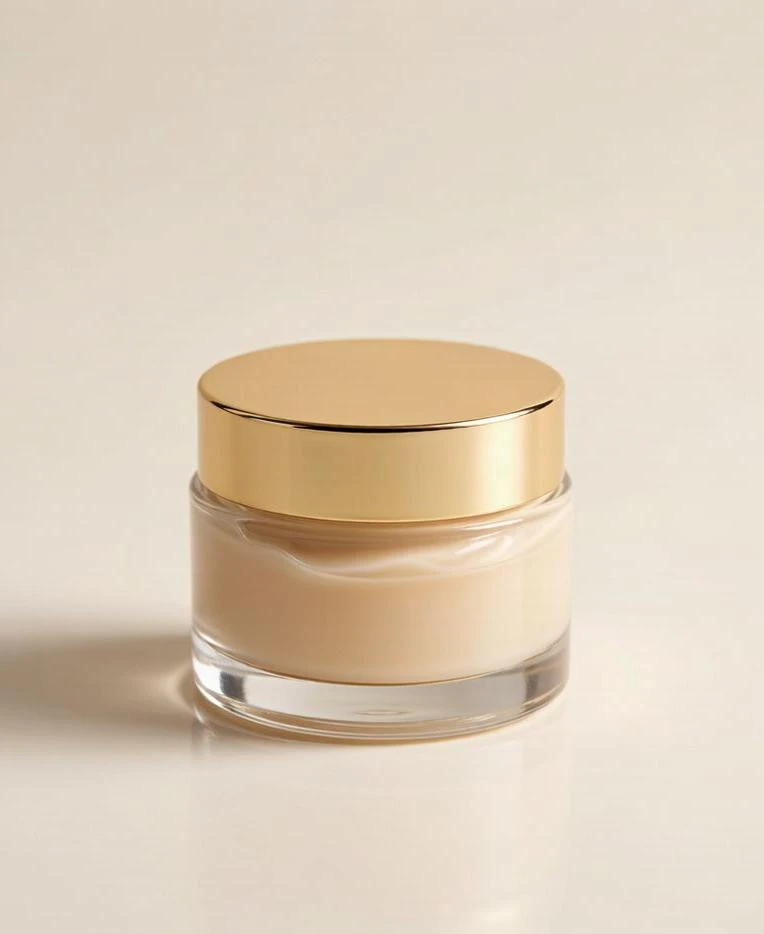
1. The Real Cost Structure of a Skincare Product
When calculating the Cost of Goods Sold (COGS) for a single unit of skincare, the final number is rarely just about the liquid inside. The total cost is divided into four primary pillars:
- The Bulk (The Formula): The actual liquid, cream, or gel.
- Primary Packaging: The bottle, tube, or jar that directly holds the formula, plus the pump or dropper.
- Secondary Packaging: The outer box, shipper carton, and protective inserts.
- Labor & Manufacturing Fees: The cost of compounding, filling, capping, labeling, and quality control.
Insider Secret: In the beauty industry, it is a well-known paradox that the packaging often costs significantly more than the liquid inside it. For a standard $30 hyaluronic acid serum, the formula itself might only cost $0.40, while the custom glass bottle and pump could easily cost $1.50.
2. Formulation Choices: Private Label vs. Custom R&D
Before a single drop is mixed, you must choose your formulation path. This decision is the single biggest driver of your upfront, pre-production costs.
Private Label (Stock Formulations)
Private labeling involves choosing an existing, pre-tested formula from a manufacturer’s catalog and putting your brand name on it.
- Upfront R&D Cost: $0.
- Minimum Order Quantities (MOQs): Very low (often 500 to 1,000 units).
- Pros: Fast time-to-market, low financial risk.
- Cons: No ownership over the formula; your competitors can sell the exact same product.
Custom Formulation
Custom formulation requires hiring a cosmetic chemist to build a proprietary formula from scratch.
- Upfront R&D Cost: $2,000 to $10,000+ per product for chemist fees and stability testing.
- MOQs: High (typically 3,000 to 10,000+ units per run).
- Pros: Unique product texture, proprietary ingredient story, and true brand equity.
- Cons: Expensive, requires rigorous stability and preservative efficacy testing (PET), and takes 6 to 12 months to develop.
3. Demystifying Raw Materials and Ingredient Pricing
Ingredient pricing fluctuates based on purity, sourcing ethics, and order volume. Skincare ingredients generally fall into three pricing tiers:
- Base Commodities ($1 – $5 per kg): Water (Aqua), Glycerin, Mineral Oil, and basic fatty alcohols. These form the bulk of creams and lotions.
- Standard Actives & Emulsifiers ($10 – $50 per kg): Standard Niacinamide, Salicylic Acid, Glycolic Acid, and standard plant oils (like Jojoba or Argan).
- Premium/Patented Actives ($100 – $1,000+ per kg): High-tech peptides, stabilized Retinol, organic botanical extracts, and sustainably sourced marine ingredients.
Because active ingredients are used at very low percentages (usually 0.1% to 5% of the total formula), even expensive actives can be cost-effective when diluted across a large batch.
4. Packaging and the “Hidden” Manufacturing Costs
Packaging isn’t just about aesthetics; it’s a logistical choice. Your packaging choices directly affect your filling costs and product shelf-life.
- Glass vs. Plastic: Glass feels luxurious and is infinitely recyclable, but it increases shipping weight (raising freight costs) and is prone to breakage on the assembly line. Plastic (PET or PP) is cheaper, lighter, and more durable, but can look less premium unless customized.
- Airless Pumps vs. Open Jars: Airless pumps protect sensitive ingredients (like Vitamin C and Retinol) from oxidizing. However, they cost 40% to 60% more than standard lotion pumps and have higher failure rates during manufacturing assembly.
- The Component Decorating Trap: Silk screening, hot stamping, and custom color-matching add up. Every pass under a printing machine adds $0.10 to $0.30 per unit.
5. Supply Chain Logistics: From Factory Gate to Customer Door
A product is not profitable until it safely reaches your warehouse—or better yet, your customer’s doorstep. Brand founders often fail to budget for the supply chain journey.
[Raw Material Suppliers] ➔ [Manufacturing Facility] ➔ [Freight / Customs] ➔ [3PL Warehouse] ➔ [End Consumer]
Inbound Freight and Duties
If you source your packaging from overseas (e.g., China, Italy, or South Korea) and manufacture the formula domestically (e.g., in the US or UK), you must calculate landed cost. This includes ocean/air freight, customs clearance fees, and import duties. In a volatile freight market, shipping can add anywhere from $0.20 to $0.80 to the cost of a single unit.
3PL Fulfillment and Warehousing
Once manufactured, your products sit in a Third-Party Logistics (3PL) warehouse. 3PLs charge for:
- Storage: Per pallet, per month.
- Pick and Pack: A flat fee (usually $1.50 to $3.00) to grab the item and place it in a box.
- Shipping Carriers: The actual postage cost (USPS, FedEx, DHL) to get the product to the consumer.
6. The Financial Blueprint: A Sample Cost Breakdown
To visualize how these costs stack up, let’s look at a hypothetical production run for a Premium 30ml Anti-Aging Serum with a custom formula, assuming an order volume of 5,000 units.
| Cost Component | Description | Cost Per Unit (USD) |
| Formula Bulk | Active peptides, hyaluronic base, stabilizers | $0.65 |
| Primary Packaging | 30ml frosted glass bottle + glass dropper | $1.20 |
| Secondary Packaging | Unit box with soft-touch finish and foil stamping | $0.45 |
| Labor (Turnkey Filling) | Filling, capping, lot-coding, and shrink-wrapping | $0.70 |
| Inbound Freight | Shipping components to the filler | $0.25 |
| Quality Control & Testing | Amortized batch testing and micro-testing | $0.10 |
| Total COGS (Landed) | The final cost to make one retail unit | $3.35 |
The Golden Pricing Rule of Skincare
To run a healthy, venture-backed or highly profitable bootstrapped brand, your retail price should ideally be 4x to 6x your COGS.
If your landed COGS is $3.35, your retail price should sit between $14.00 (mass-market margin) and $22.00+ (prestige margin). This multiplier ensures you have enough gross margin to cover digital marketing, customer acquisition costs (CAC), influencer gifting, platform transaction fees (like Shopify or Amazon), and wholesale discounts if you sell to retailers like Sephora or Target (who typically demand a 50% to 60% discount off retail price).
Summary Strategies for Optimizing Costs
If you are looking to trim the fat from your skincare supply chain, focus on these three high-leverage levers:
- Standardize Your Components: Use stock bottles that the manufacturer already keeps in inventory, and differentiate your brand solely through custom labels or box designs. This bypasses high component MOQs.
- Negotiate Tiered Pricing Early: Ask your manufacturer for a pricing matrix (e.g., pricing at 3k, 5k, 10k, and 25k units). Even if you start at 3k units, knowing the price drops by 20% at 10k units helps you map out your cash flow and scaling milestones accurately.
- Consolidate Vendors: Try to find a turnkey manufacturer who handles both the formulation and the packaging sourcing. While slightly more expensive per unit than sourcing everything yourself, it drastically reduces your shipping errors, lead times, and logistical headaches.
Related reading
jindao2025
SkincareFactoryOEM Team